
Narsingha
A powerful ceremonial horn with a long, curved shape and a strong, resonant sound.
Meet the Instrument
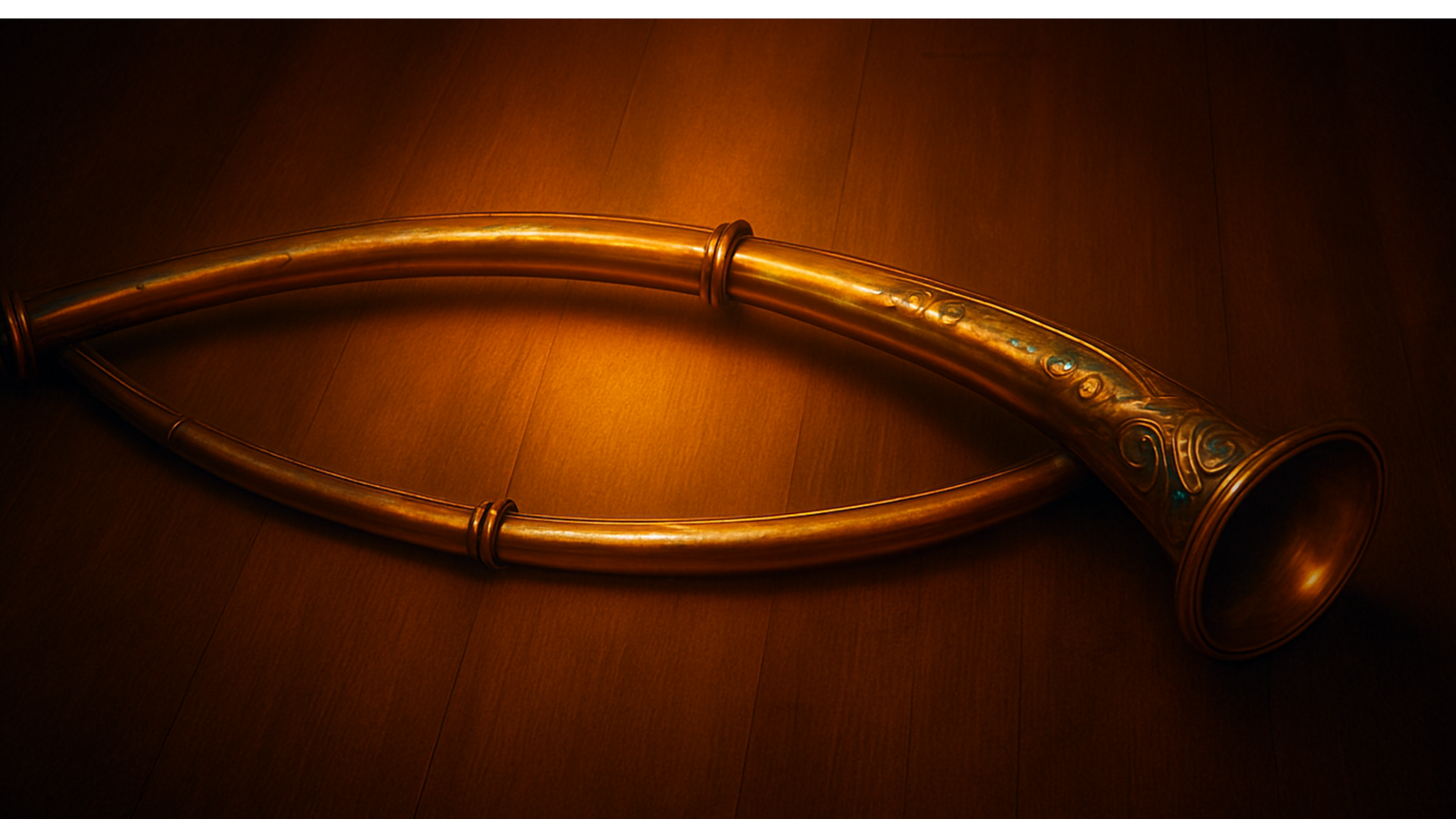
The Narsingha is a long, curved metal horn, commonly shaped in a broad C or bow-like curve.
It produces a strong, resonant tone and does not use finger holes or keys in the way a melodic woodwind does.
Look Closely
Notice the curved body, mouthpiece, and the opening at the end of the horn.
Listen to the Narsingha
Listen to the instrument’s powerful ceremonial sound.
How Is It Played?
Blow through it
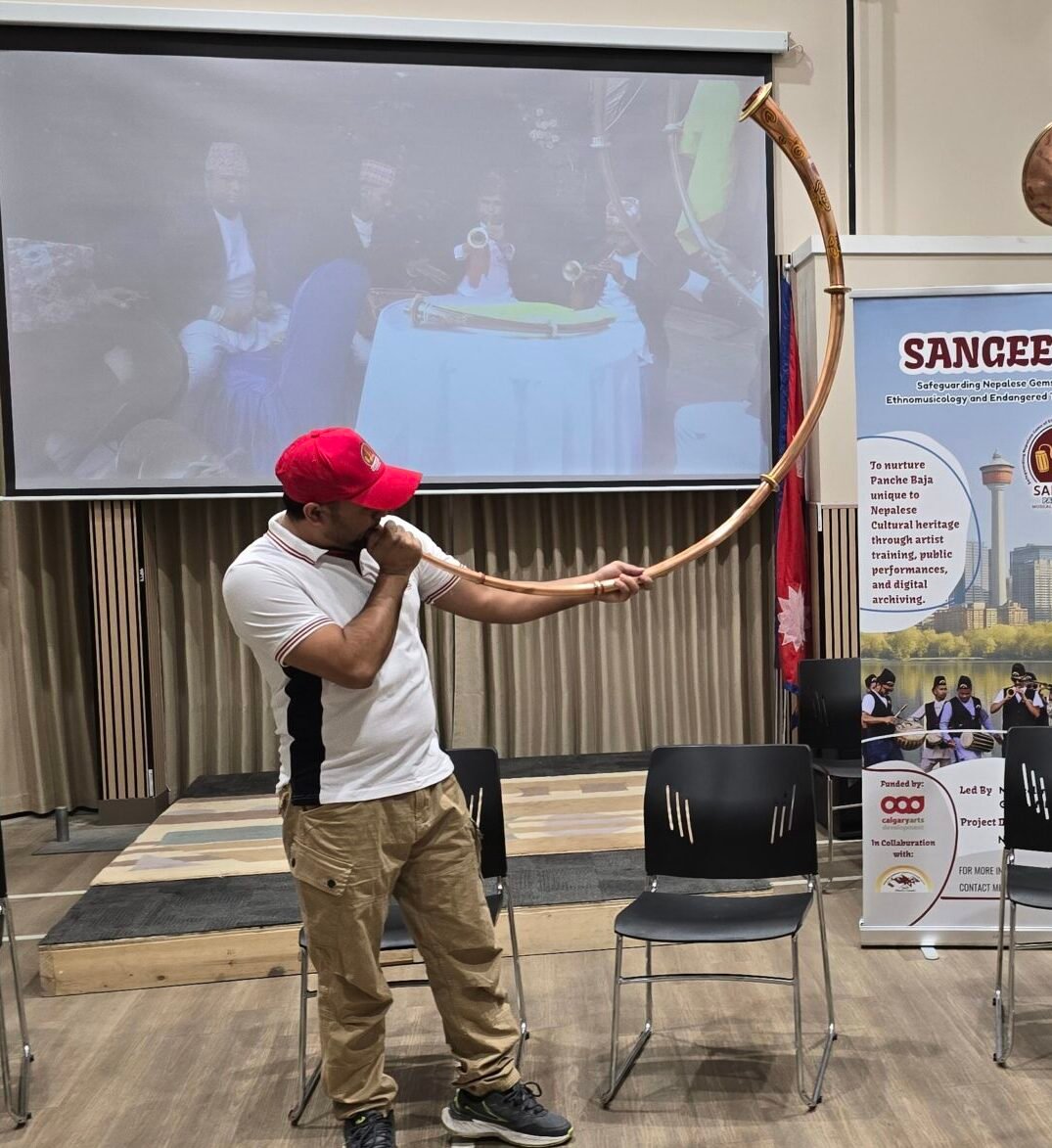
The musician blows through the mouthpiece.
Produce the sound
The player’s vibrating lips help create the trumpet-like tone.
Make a strong sound
The long horn produces a strong, resonant sound suited to outdoor settings.
Its Role in the Ensemble
- Announces important moments
- Adds volume and ceremonial grandeur
- Reinforces the ceremonial character of performances
Cultural note: The exact shape, construction, and role of the Narsingha can vary among regional traditions.
Listening and Reflection
Listen to the recording and imagine the sound being played during a procession.
Think about it: Why might a powerful horn be useful during an outdoor ceremony?