
Jhyali / Jhyamta (झ्याली)
A pair of thin metal cymbals that create bright, shimmering sounds and keep steady rhythmic timing across the ensemble.
Meet the Instrument
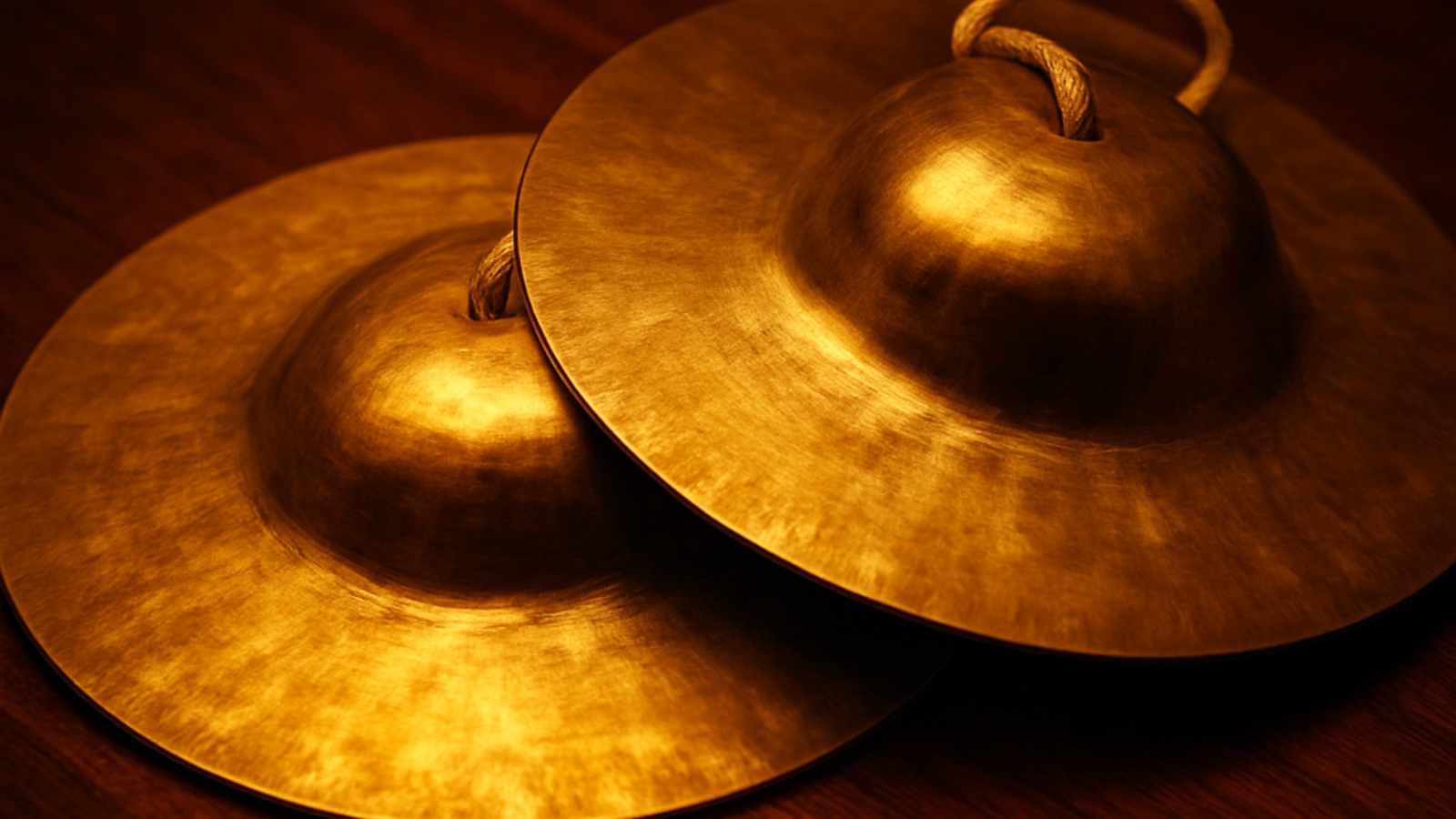
Jhyali consists of a pair of thin, circular metal cymbals—often crafted from bronze or brass—held one in each hand by cords or central bosses.
When struck or clashed together, they produce a crisp, high-pitched ringing sound that cuts clearly through drums and outdoor gatherings.
Look Closely
Notice the matched pair of metal plates, the raised central dome, and the cord handles used to hold and control each cymbal.
Listen to the Jhyali
Listen to the bright, shimmering ring and rhythmic accents of the cymbals.
How Is It Played?
Hold both cymbals
The musician holds one cymbal in each hand using the attached cords or straps.
Clash or brush together
Striking the plates together creates a bright ring, while sliding or muting controls the sustain.
Mark the beat
Steady strikes lock in the tempo so all musicians and dancers stay together.
Its Role in the Ensemble
- Maintains steady timing and rhythmic coordination
- Cuts through outdoor procession noise so everyone can hear the beat
- Adds bright metallic sparkle and energetic accents to Panche & Naumati Baja
Cultural note: Depending on the region and tradition in Nepal, Jhyali may also be known as Jhyamta or Jhurma, with variations in size, metal alloy, and playing style.
Listening and Reflection
Listen to an ensemble recording and clap along whenever you hear the bright clash of the Jhyali.
Think about it: Imagine that the Jhyali loses the beat during a busy outdoor parade. How might the other musicians respond?