
Dholaki (ढोलकी)
A traditional two-headed drum that adds rhythmic patterns, lively beats, and energy to the Panche Baja and Naumati Baja ensemble.
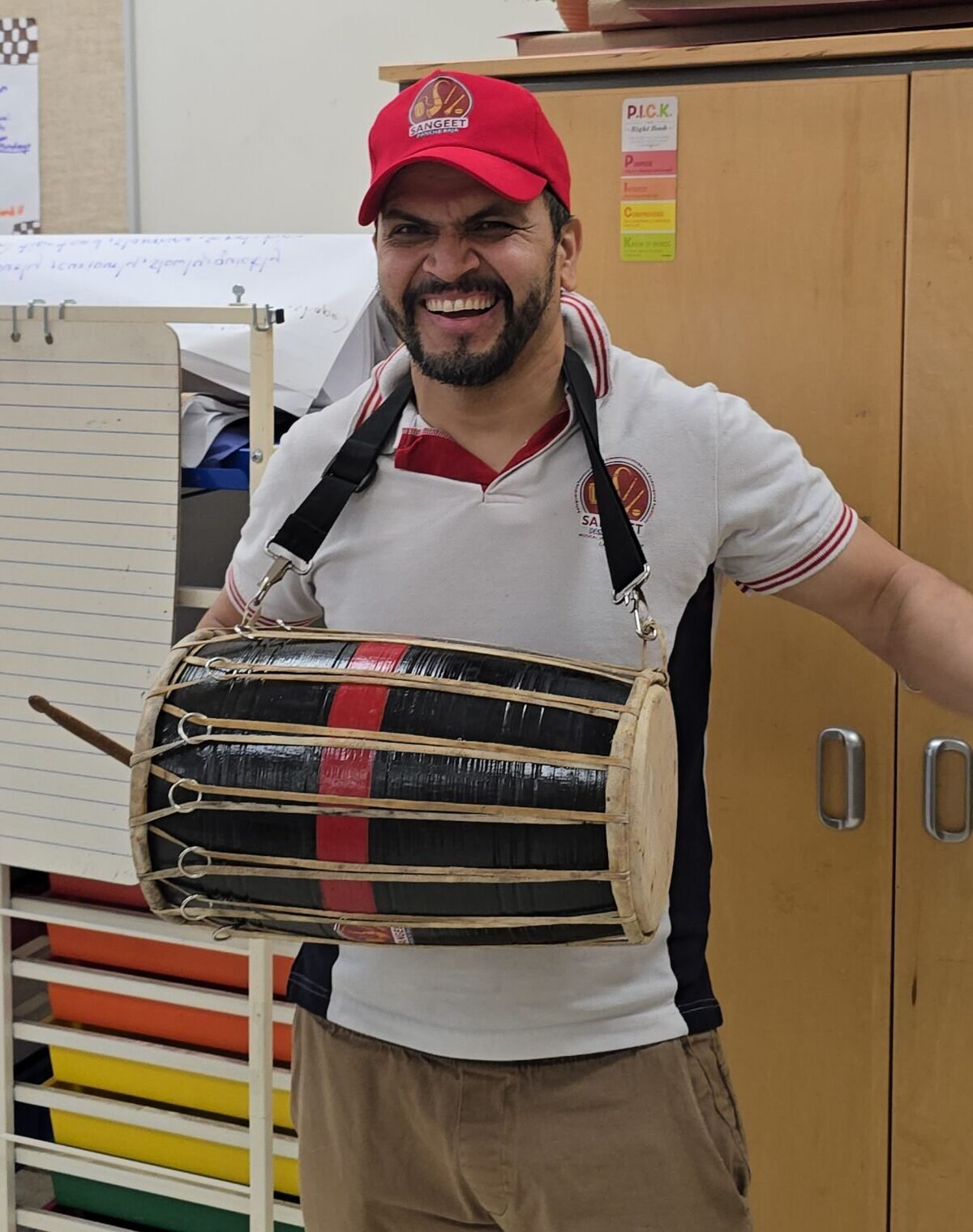
Meet the Instrument
The Dholaki is a traditional drum with two drumheads stretched across a hollow body. The two sides can produce different tones, allowing the musician to create a variety of rhythmic sounds.
It is played by striking the drumheads with the hands. The combination of bass and sharper tones helps create lively rhythmic patterns.
Look Closely
Notice the hollow drum body, the two drumheads, and the tension system used to keep the heads tight. Observe how the two sides may differ in size and sound.
Listen to the Dholaki
Listen for the contrast between the deeper bass tones and the sharper rhythmic sounds produced by the two drumheads.
How Is It Played?
Hold the drum
The musician positions the Dholaki securely, often across the body or on the lap, depending on the local playing style.
Strike the drumheads
The hands strike the two heads to produce different tones. The musician combines bass and higher sounds into patterns.
Create rhythmic patterns
Repeated beats and variations help support the musical pulse and add movement to the ensemble.
Its Role in the Ensemble
- Contributes rhythmic patterns and lively drum sounds
- Supports the pulse created by the other percussion instruments
- Adds rhythmic variation and energy to the music
- Helps the musicians maintain coordination during performance
Cultural note: Drum names, construction, and playing techniques can vary across Nepal’s musical traditions and communities.
Listening and Reflection
Listen to a Panche Baja or Naumati Baja recording. Try tapping a steady beat while listening for the Dholaki’s rhythmic patterns.
Think about it: How does the music change when the Dholaki plays a steady rhythm compared with when it adds a new rhythmic pattern?